Pavilion
Untamed Assembly: Backstage of Utopia presents newly commissioned work by the interdisciplinary artist duo MAREUNROL’S that has emerged in dialogue with the archives of Untamed Fashion Assemblies (UFA) – a series of experimental fashion, art, and performance events held in Riga between 1990 and 1999 that were initiated by alternative fashion designer Bruno Birmanis.
Utopia
The pavilion approaches Untamed Fashion Assemblies as lived spaces – sites where freedom was tested through dress, bodies, collaboration and daring. Linking past and present, the exhibition highlights the role played by utopian thinking in moments of transition. It asks how collective imagination, desire, and visibility are produced when political and economic systems are in flux, and how futures can be imagined and new forms of togetherness rehearsed behind the scenes rather than on centre stage.
Backstage
MAREUNROL’S installation rethinks the legacy of UFA from the perspective of the present and is itself conceived of as a backstage – an in-between space of preparation, invisible labour, joy, improvisation and human connection. Drawing on histories of the Assemblies and the visual elements of a fashion show, the clothing rack – one of the most ubiquitous elements of any backstage – becomes a holding device within the installation and the architecture for its stories. Other motifs that run through MAREUNROL’S practice, such as birds and textile sculptures, also appear in the installation, carrying with them memories of flight, risk and fragility.
Transition
Held during a decade of profound political and social transformation, UFA expanded existing notions of fashion by facilitating crossovers into visual art, drag, music, and club culture. Defying conservative social norms inherited from the Soviet era, the Assemblies functioned as an alternative to the emerging commercialised fashion markets of the West. They were improvised, collaborative and often chaotic environments where students and international stars shared the same stage. Makeshift scenography, DIY costumes and radical styling generated an atmosphere of rare intensity. Media coverage from Vogue, The Guardian, the BBC, MTV and others briefly positioned Riga as an unexpected avant-garde hub – experimental, carnivalesque and fearless.
Collective imagination
Young Baltic designers such as Bruno Birmanis himself, Juozas Statkevičius and Sandra Straukaitė appeared alongside figures such as Paco Rabanne, Vivienne Westwood, Zandra Rhodes and Andrew Logan. A number of emerging designers who would later become global icons, including Viktor & Rolf, passed through UFA as fashion students.
In-between spaces
The Assemblies became spaces where bodily display and costume could be tools for negotiating new identities. They were platforms for sexually charged gestures, drag, role play and deliberate exaggeration as well as innovations in cut and silhouette. A carnivalesque suspension of social norms accompanied serious experimentation with image and form.
Freedom
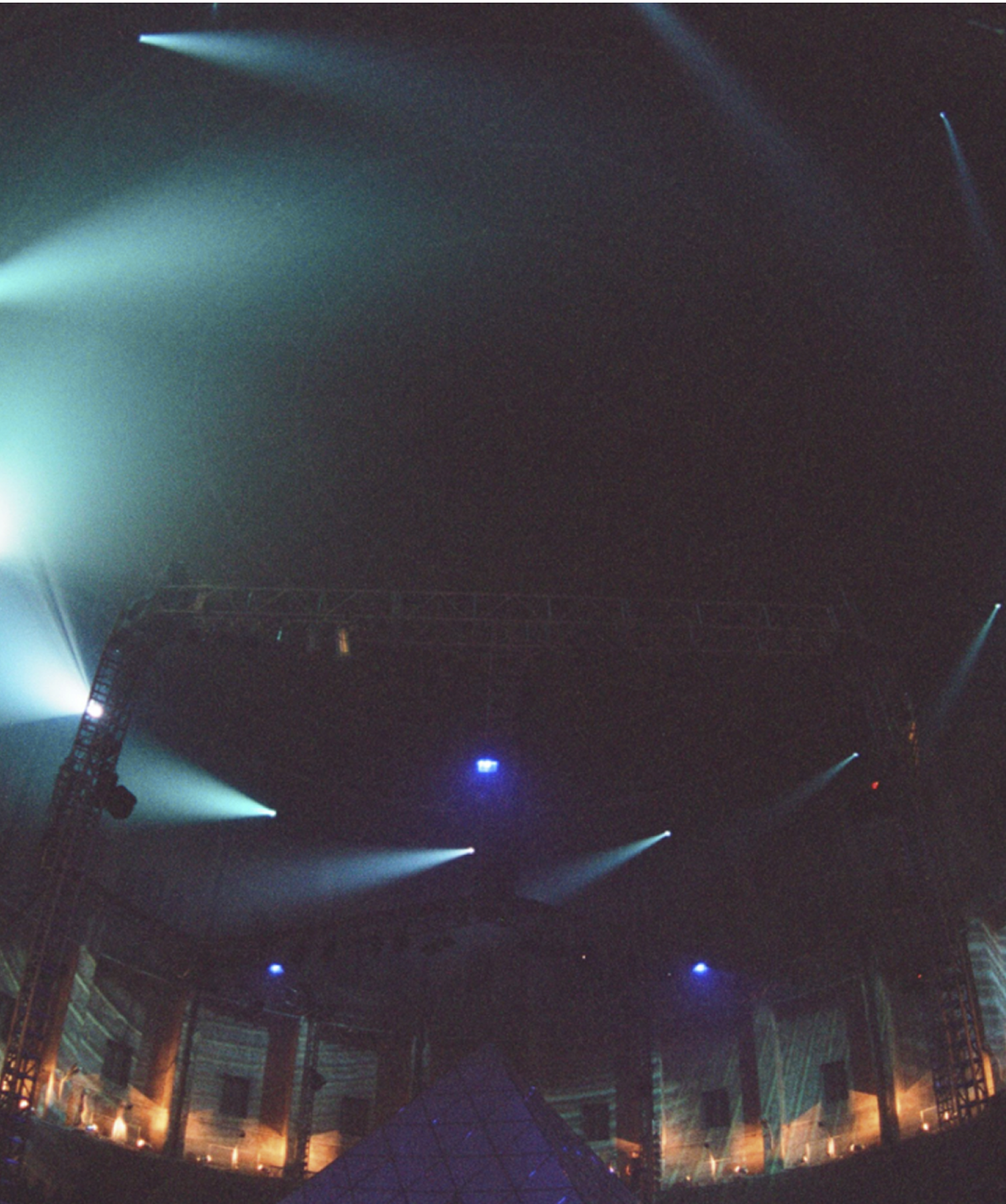
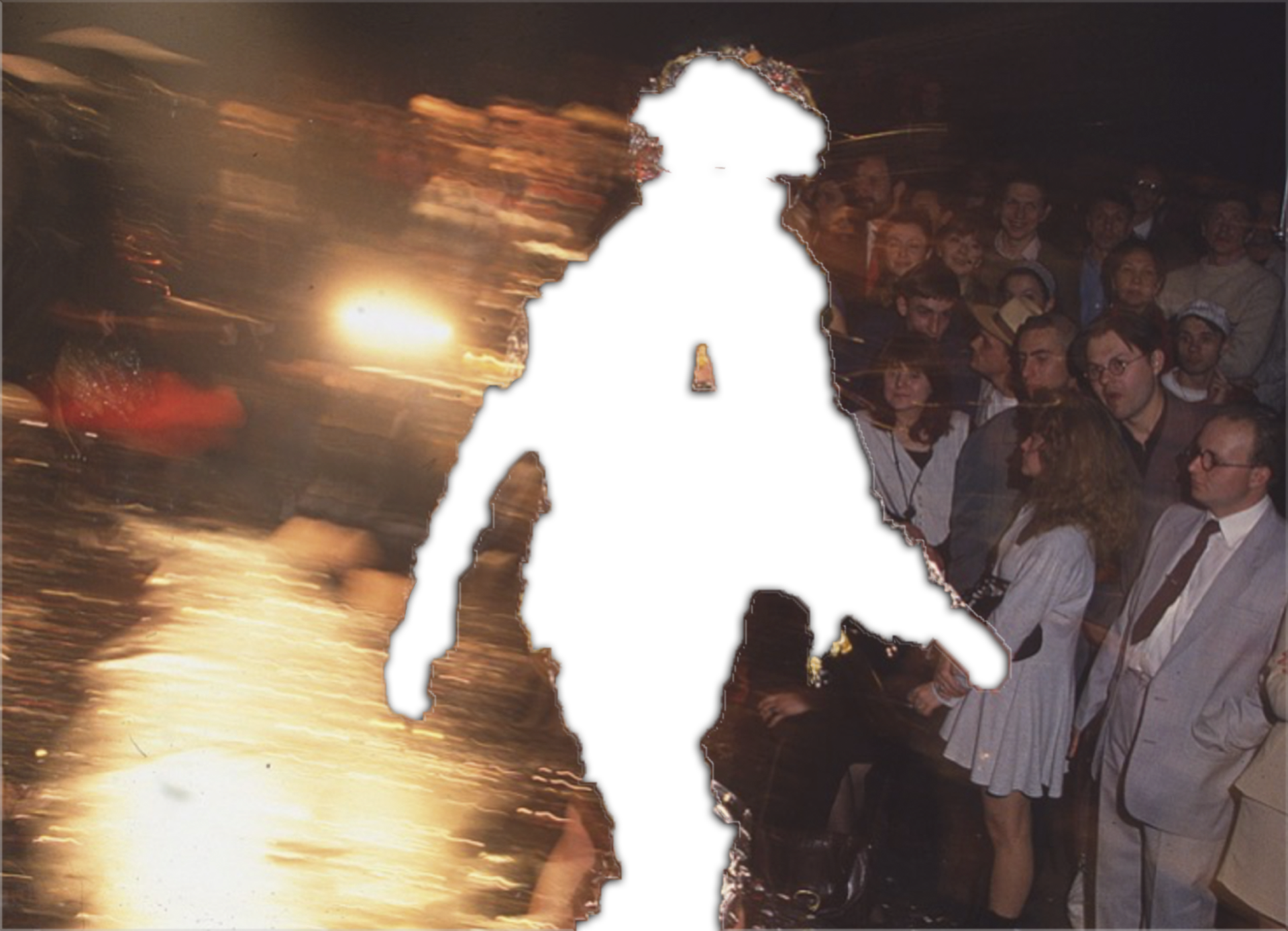
Across the installation, the spirit of UFA is captured in newly digitised footage and photographs from Birmanis’ archive that show the rehearsals, preparations, afterparties, jury moments and audience reactions. Several thematic lines anchor the presentation. References to travel and the crossing of newly opened borders foreground the extraordinary logistical conundrums that UFA managed to solve in the process of organising events on an international scale and building a transnational community and network. Scarcity was often a driving force for creativity, with unexpected materials coming together to form bold collages: blankets and pillows are reimagined as costumes, sheets of paper transformed into evening gowns. Political freedom, newly gained and protected through the barricades, was also exercised through bold performances, such as the 1991 opening of UFA at Riga’s central Dome Square.
Risk
Reflecting on this period, Birmanis recalls: “It was like an internal explosion that had been brewing in the minds of all creatively thinking people. First, there was the feeling that we wouldn’t be taken to the KGB. Second, it was as if floodgates had opened, and a wave carried everyone along. Only later did a much deeper stage of understanding begin – what freedom truly means” (Arterritory, 2013).
Future-making
The Latvian Pavilion returns to UFA to ask how we might imagine freedom, risk and possible futures today, and what can be gathered now from the utopian visions of these festivals.